Bulk Uniform Supplier and Workwear Manufacturer for Business Teams
UC Uniform manufactures and supplies bulk uniforms and branded workwear to businesses across the UAE. From our facility we cut, stitch, embroider and print company uniforms for corporate offices, hotels and resorts, hospitals and clinics, restaurants and cafés, schools, security firms, facilities management contractors and construction sites. Every order runs the same route: fabric selection, digital mockup, physical sample, bulk production, then three-stage quality inspection before dispatch. That applies whether you are ordering 25 polo shirts or 2,000 coveralls.
Below are the questions procurement and HR teams ask us most often before placing a first order.
What Makes a Good Company Uniform?
A uniform that works here has to survive three things: heat, daily wear and commercial laundry. Fabric weight decides the first. Roughly 140 to 160 GSM poly-cotton suits indoor corporate and hospitality roles, while 190 to 240 GSM twill or gabardine is the right call for kitchen, industrial and outdoor work.
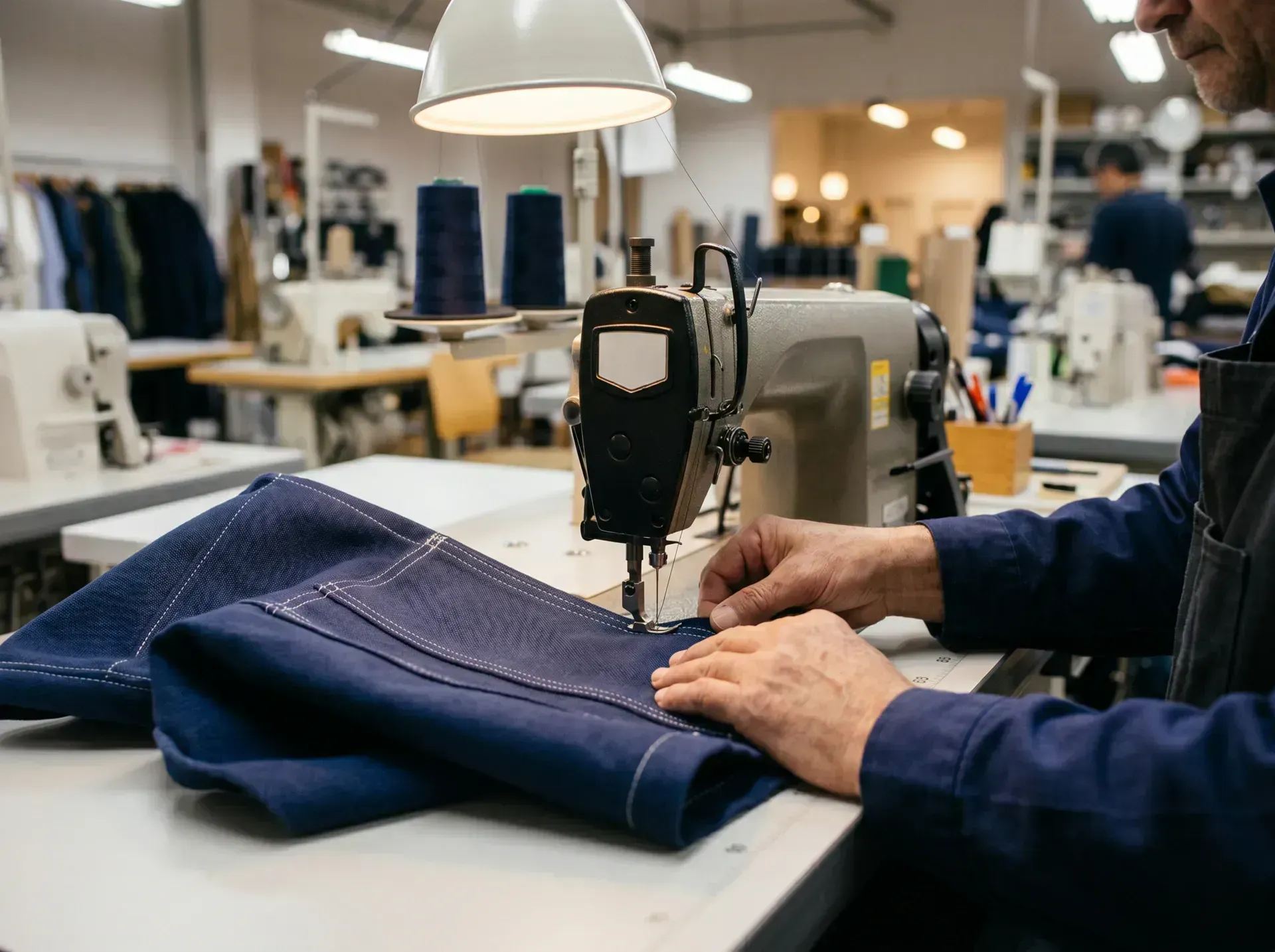
Stitch construction decides the second. Double-needle seams and bar-tacked stress points are what separate a uniform that lasts eighteen months from one that fails in four. Branding method decides the third, because a logo that cracks after twenty washes undoes the whole investment.
Fit matters more than most buyers expect. A properly graded size set, with separate men's and women's blocks rather than unisex sizing, cuts down the exchange requests that eat your HR team's time after every rollout. We provide size sets for trial before bulk cutting on every custom order.
Choosing Uniform Fabric for Hot-Climate Working Conditions
Fabric choice drives both comfort and cost more than any other decision in a uniform order. The options we specify most often:
- Poly-cotton, 65/35 or 80/20. The default for corporate shirts, hotel front of house and school uniforms. Holds shape, resists creasing and takes embroidery cleanly.
- Cotton twill and gabardine. Heavier, structured fabrics for chef jackets, security uniforms and industrial trousers, where durability outweighs weight.
- Dri-Fit and honeycomb piqué polyester. Moisture-wicking fabrics for outdoor crews, valet and parking staff, delivery teams and sports uniforms.
- Antimicrobial-finished poly-viscose. Standard for medical scrubs and lab coats in clinics and hospitals.
- Ripstop and FR-treated fabric. For construction, oil and gas, and facilities management sites where workwear has to meet a written safety specification.
We send physical fabric swatches before you commit to a bulk run, so the decision gets made by hand rather than from a screen.
Embroidery or Printing: Which Branding Method Is Right?
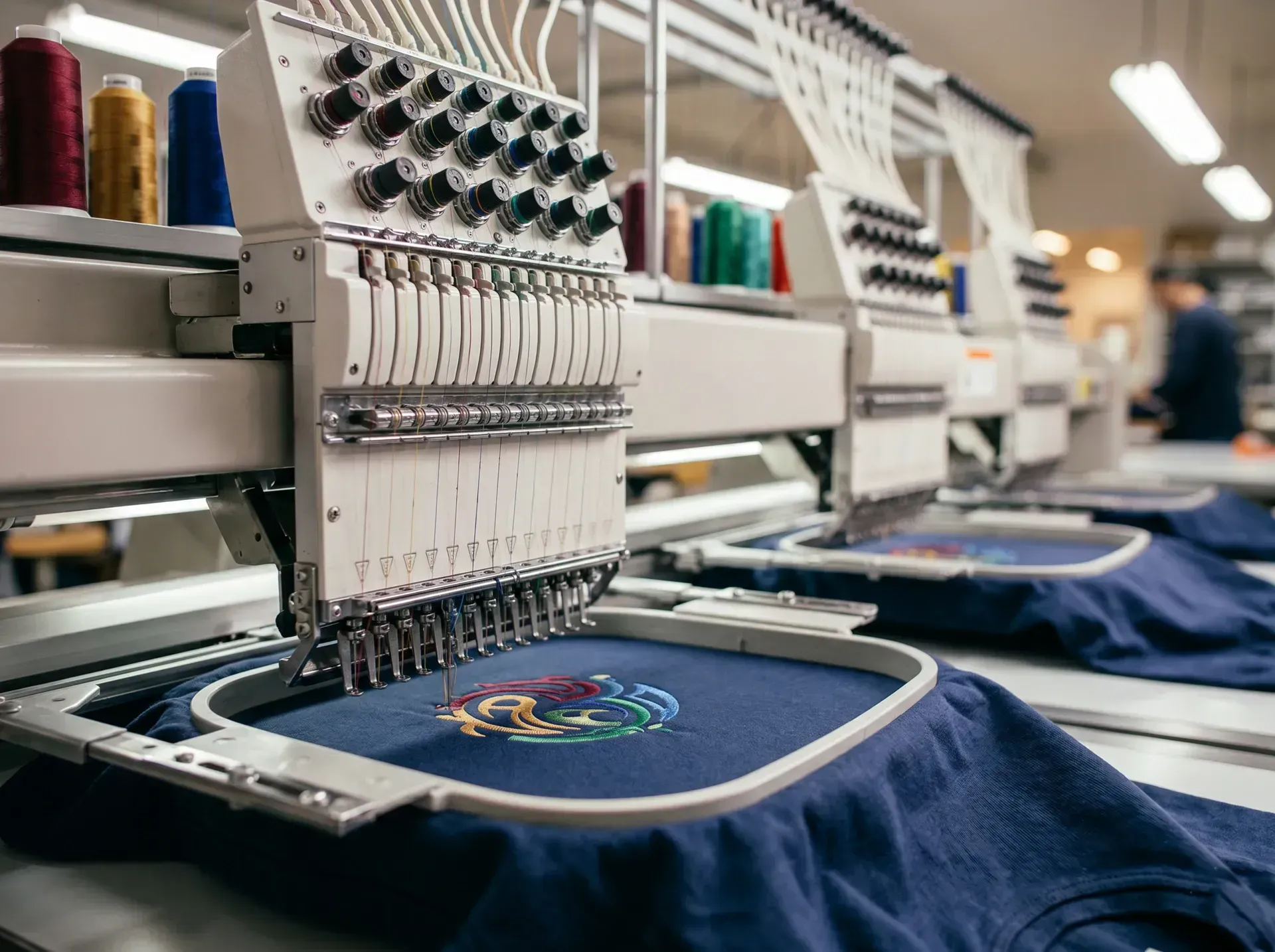
Embroidery gives the most durable and most premium finish. It suits shirts, blazers, jackets, caps, aprons and towels, and it survives commercial laundry far longer than any print. Our 12-needle machines run Pantone-matched thread, and we keep your thread codes on file so a reorder two years later still matches the original.
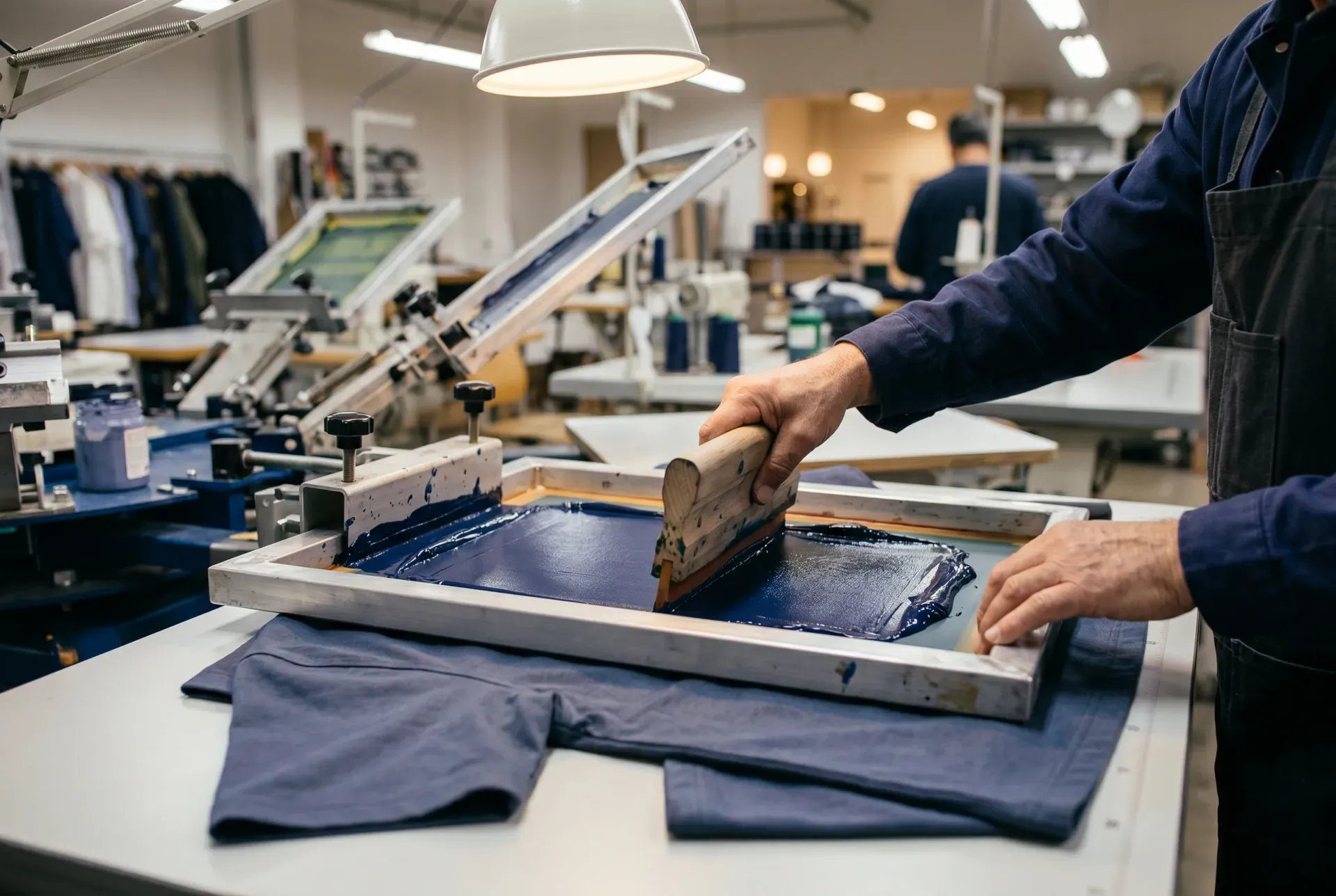
Printing is the better choice for large designs, full-colour artwork, back-of-garment text and higher quantities on a tighter budget. Screen printing suits high-volume single-colour work. DTG and DTF handle detailed multi-colour artwork on cotton. Dye-sublimation is used for sports jerseys and full-coverage designs.
As a rule: logo on the chest, use embroidery. Large graphic or full-back branding, use printing. If one order needs both, we split the methods by garment and quote each line separately.
Minimum Order Quantity and Uniform Delivery Time
Custom-stitched uniforms start at 25 pieces per design. Ready-made stock with logo branding starts at 10 pieces. There is no minimum on the number of designs inside one order, so a hotel can order 25 housekeeping sets and 25 front-desk sets on the same purchase order.
Standard bulk orders ship 10 to 15 working days from mockup approval. Rush production can compress that to 5 working days when an opening date moves. Ready stock with branding usually dispatches within 3 to 5 working days.
Larger volumes reduce the per-piece price. If you are planning a phased rollout across multiple sites, tell us the full annual quantity at quotation stage. We price against the total commitment, not just the first delivery.
How Much Do Company Uniforms Cost?
Uniform pricing is driven by five variables: fabric type and GSM, garment complexity, order quantity, branding method and delivery timeline. A branded ready-made polo shirt sits at the affordable entry point. A tailored corporate shirt with embroidered logo costs more. A structured blazer or a certified flame-retardant coverall sits at the premium end.
The gap most buyers never see is the one between a factory and a trading company. A trader buys finished garments and adds a margin, typically 25 to 40 percent, before quoting you. We manufacture, so that margin does not exist on your invoice.
We quote line by line, with fabric, stitching, branding, packing and delivery shown separately, so you can see exactly what you are paying for and adjust the specification if you need to hit a number. Send your quantity and industry and you will have a costed breakdown within one working day.
Safety Workwear Standards for Industrial Sites
Construction, oil and gas, logistics and facilities management contracts increasingly specify a standard, not just a garment. The ones that come up most:
- EN ISO 20471. High-visibility clothing, graded by class based on reflective and fluorescent surface area. Most site inductions require Class 2 or Class 3.
- EN ISO 11612. Protective clothing against heat and flame, standard for hot works and downstream oil and gas environments.
- OEKO-TEX Standard 100. Tested for harmful substances, increasingly requested for healthcare and school uniforms.
If your HSE requirement names a standard, send it with your enquiry and we will specify fabric and construction to match rather than supplying a lookalike garment. This is one of the most expensive mistakes in a workwear order, because non-compliant hi-vis fails inspection and the whole batch gets rejected.
How to Choose the Best Uniform Company for Your Business
Most businesses advertising workwear are traders. They hold catalogues, take your order and place it with a factory, often overseas. That model works until something goes wrong: a colour drifts between batches, a size runs short, a delivery slips, and there is no direct line to the production floor.
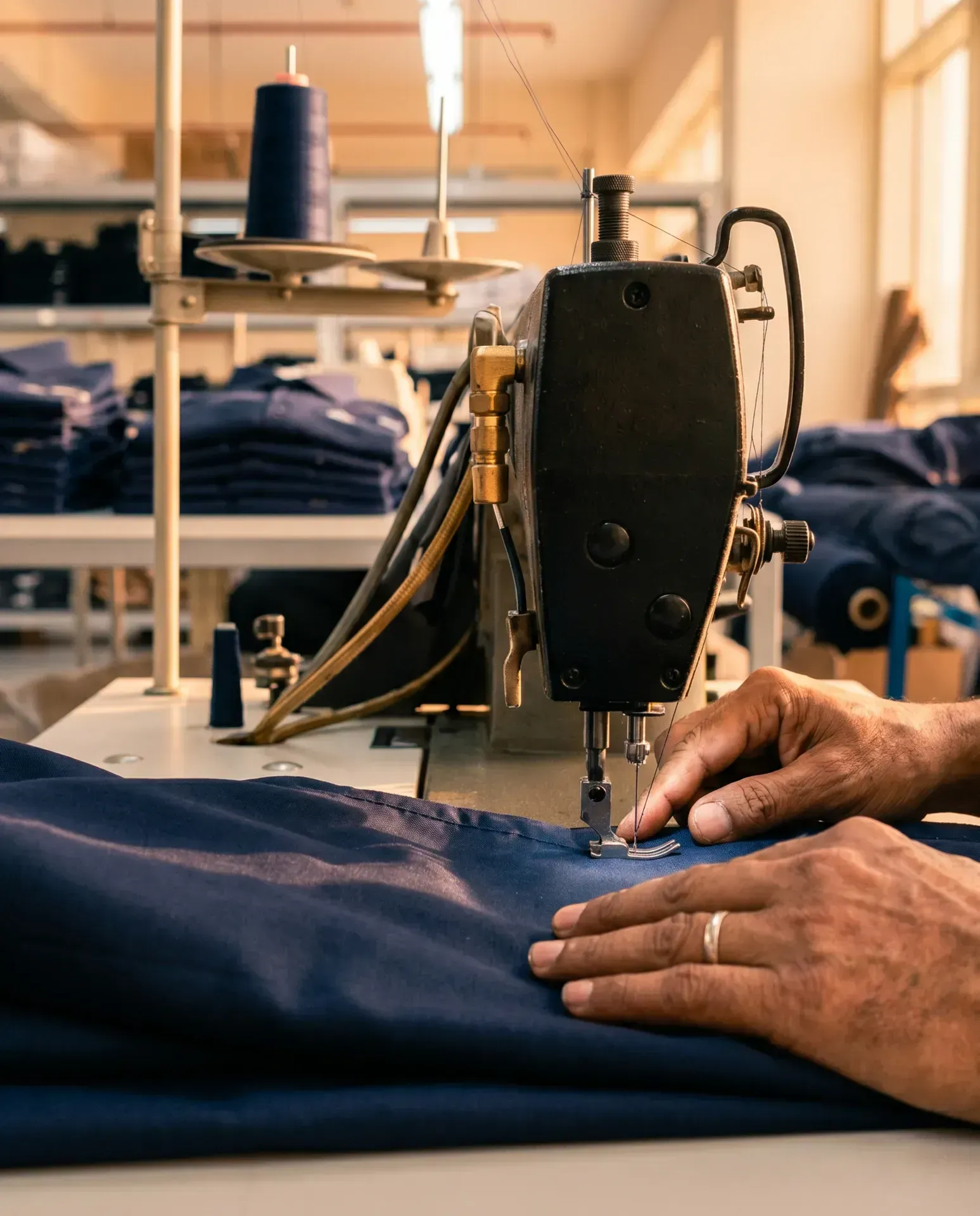
We manufacture in house. Stitching, logo embroidery, workwear printing and digital printing all happen under one roof. That means we can give you a real lead time rather than an estimated one, correct a fault without a shipping cycle, and hold your fabric lot and thread codes on file so reorders match years later.
You can also come and see it. Our Ajman showroom is open Saturday to Thursday, 9:00 AM to 6:00 PM. Handle the fabrics, check the stitching and review samples before committing to a bulk order. Book a visit or request a quote and we will come back the same working day.